The Northern Base Camp is a 7-day trek in a far-remote trekking area of the renowned Annapurna trekking region. It’s a challenging trek that passes through hidden glacier valleys and the unknown wilderness of the Annapurna.


Annapurna North Base Camp Trek - 7 Days
Duration
7 Days
Trip Grade
Moderate
Maximum Altitude
4310 Meters
Group Size
Min 2 Person
Activities
Trekking
Starts
Pokhara
Ends
Pokhara
Best Time
Sept, Oct, Nov, Mid Mar, Apr & May
Video
Introducing the Annapurna North Base Camp
From the gateway to the Annapurna, Pokhara is a lake valley beside Fewa Lake. This historically significant lake holds not only water but also the countless fates and hopes of Nepalese people. The valley is the entry point to the Annapurna, Machhapuchre, and surrounding peaks, which hold various access routes to multiple globally known destinations and hidden gems like Annapurna North Base Camp.
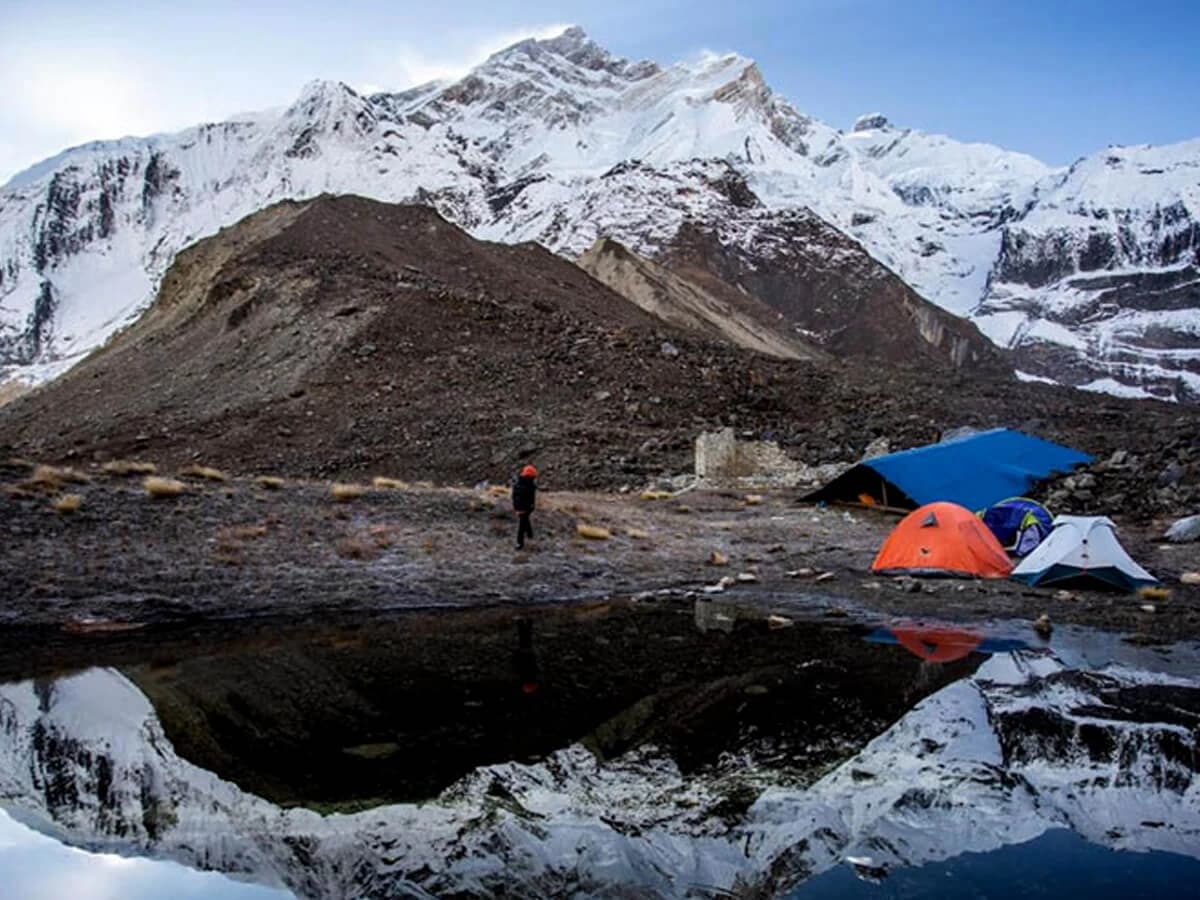
Protected and conserved under the laws of the Annapurna Conservation Area Projects, the northern base camp offers heavenly scenery of crystal glacial lakes, waterfalls, and snow-capped peaks with peaceful and quiet trails.
Home to diverse animal and bird species, the region shelters indigenous people of different castes and origins, where even a single step and a minute's rest immerse you in deep cultural and natural beauty.
Highlights of the Annapurna Base Camp Trek
Unlike crowded routes like Annapurna Base Camp or Everest Base Camp, this trail has very few trekkers. You’ll often walk for hours without seeing anyone.
- You get a dramatic, near view of Annapurna I (8,091 m), the 10th highest mountain in the world—it feels massive and raw.
- The base camp sits near glaciers, giving a wild alpine feel with ice, moraine, and rugged terrain.
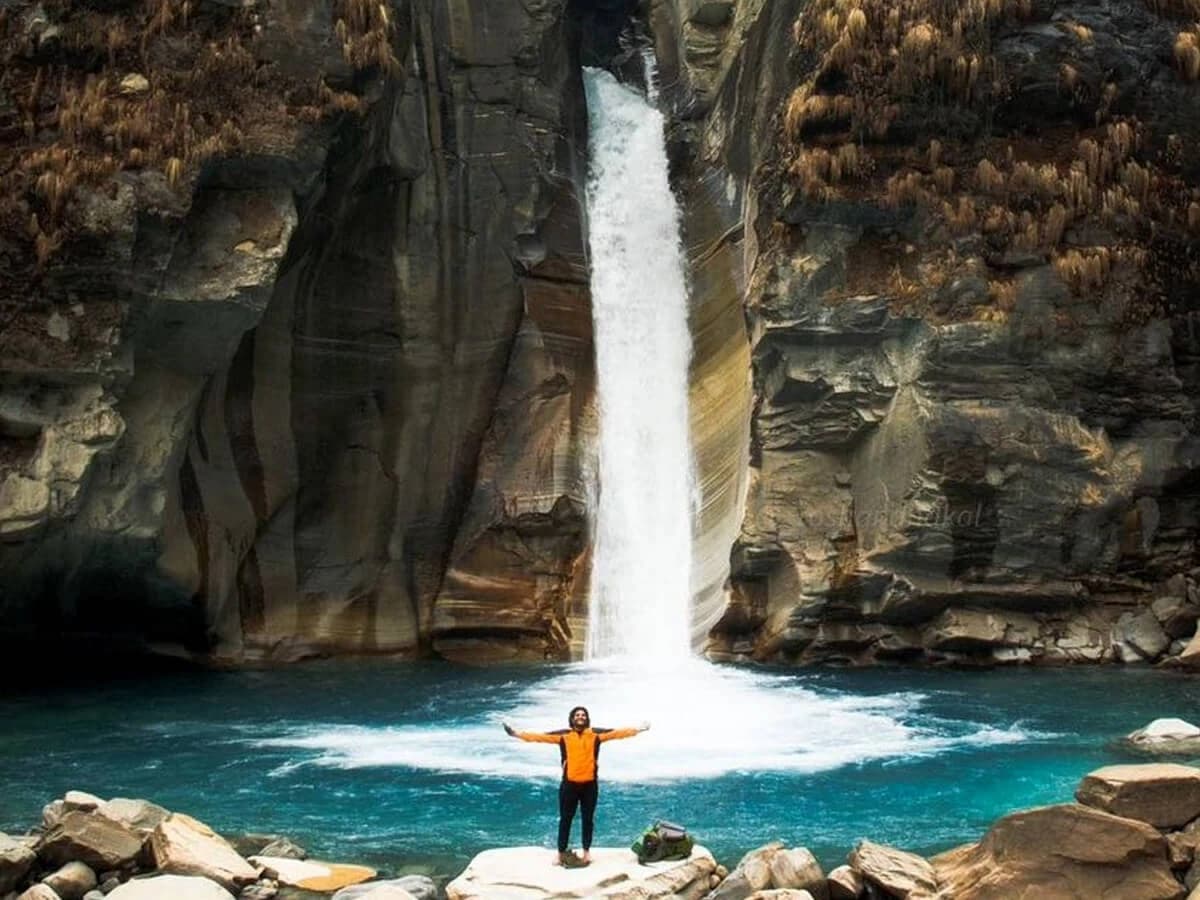
- The trail is full of natural waterfalls, especially in the lower sections — very untouched and peaceful.
- You walk through narrow valleys carved by rivers like the Kali Gandaki River, surrounded by cliffs.
- Subtropical forests (bamboo, rhododendron)
- Dense pine and oak forests.
- Alpine shrubs near base camp
- Big seasonal color changes, especially rhododendron blooms.
- Himalayan Tahr
- Musk Deer
- Snow Leopard (rare but possible)
- Danphe (Nepal’s national bird)
- Eagles, vultures, and forest birds.
- No heavy infrastructure — just mountains, forests, rivers, and silence. Very “pure” Himalayan experience.
- Still not widely known, so it gives a feeling of discovering something new, unlike mainstream treks.
- You pass through small villages with an authentic lifestyle — simple homes, traditional farming, and warm hospitality.
Why book with Wilderness Excursion?
- We arrange all required Annapurna North Base Camp permits and TIMS cards, ensuring a smooth start to your trek.
- Our experienced local guides know the remote trails, weather patterns, and terrain of the Annapurna region, reducing the risk of getting lost.
- This is a less-traveled and remote trek, so in case of altitude sickness or injury, we handle rescue and emergency evacuation quickly.
- We pre-arrange accommodation, meals, and transport, even in areas with limited facilities.
- No need to research every detail—we manage logistics, so you can focus on the wilderness experience.
- Our itineraries include proper acclimatization and safe pacing, essential for high-altitude trekking in the Annapurna region.
- Our guides help you interact with local Gurung and Magar communities, making your journey more culturally rich.
- All our guides and porters are insured and equipped, which is especially important in remote trekking routes like Annapurna North Base Camp.
- Some sections may require special permits or local coordination—we handle all necessary documentation and approvals.
- With the help of porters, you can trek comfortably through rugged trails without carrying heavy loads.
- Our guides provide deeper insights into local culture, traditions, and mountain lifestyle, adding value beyond just trekking.
Wilderness Excursion is a certified and registered travel agency based in Nepal with decades of experience and a reputation since 2014. We manage trekking routes for groups of various sizes with a 99% success rate.
Package cost & Booking options for Annapurna North Base Camp
The packaged trip to the Annapurna North Base Camp varies depending on the level of services and the number of trekkers in the group. With a decade of experience, Wilderness Excursion offers a range of packages to solo, private, and group trekkers. The price starts at USD 650 for solo trekkers, USD 499 for groups of 2-3 trekkers, and even lower for larger groups.
FOC (Free of Cost) Policy:
- 50% off the trekking package for an international tour leader for a group of 8 to 9 pax.
- 100% off in the trekking package for the international tour leader if the group is 10+ pax.
Packing List For Annapurna North Base Camp
Packing for Annapurna North Base Camp is a bit different from popular treks; it’s more remote, less commercial, and the weather can change quickly. So your packing needs to be smart, not just heavy.
Here are some basic to advanced packing lists, especially for Annapurna North Base Camp, from daily wear to gear and necessary medicine and sanitary items that are required when trekking in Nepal
Daily Wear
Simple, comfortable, and layer-friendly is the key.
| Items | Q.N | Why does it matter? |
| Moisture-wicking t-shirts | 2 | Keeps sweat away during the day |
| Trekking pants | 2 | Comfortable and dries fast |
| Fleece or light jacket | 1 | Mid-layer warmth |
| Down Jacket | 1 | Critical for high-altitude camps |
| Underwear & Sportswear | 2-3 | Breathable and quick-dry |
| Trekking Socks | 2-3 | Prevents blisters |
| Thermal base layers | 1-2 | Essential for cold nights/mornings |
Essential gears
Backpack (40-60L): Enough space for packing equipment and clothes without overpacking.
Sleeping bag: A sleeping bag can be mandatory or optional depending on the seasons and accommodation, which we will be responsible for informing you about.
Trekking poles are really useful when trekking downhills, helping on steep and rough terrain.
Headlamp: Remote areas mostly depend on solar panels for light, so it’s useful if you have headlamps when heading out at night.
Water bottles: Carry a water bottle up to 2L. Staying hydrated is necessary, and do not forget filter bags, tablets, or any other items if you need them.
Layering outfits
Instead of heavy clothes, focus on layers.
Base layers: Thermal on top and bottom, depending on the weather. Wear trekking pants on top of thermal layers after crossing 2500m.
Mid-layer: Fleece or insulated jacket to keep yourself warm during morning and night hikes.
Top layer: Waterproof or windbreaker to protect from the cold.
Others: Gloves, beanies, mufflers, and neck gaiters.
Electronics
Power Banks: There are limited charging points in remote areas, so it's much better to carry a power bank for emergencies.
Sanitary and personal care
Basic but important, especially in remote conditions.
- Toothbrush & toothpaste
- Wet wipes/tissue paper
- Hand sanitizer
- Sunscreen (SPF 50+)
- Lip balm
- Basic first aid kit
- Quick-dry towel
- Moisturizer
Trip Gallery
Itinerary
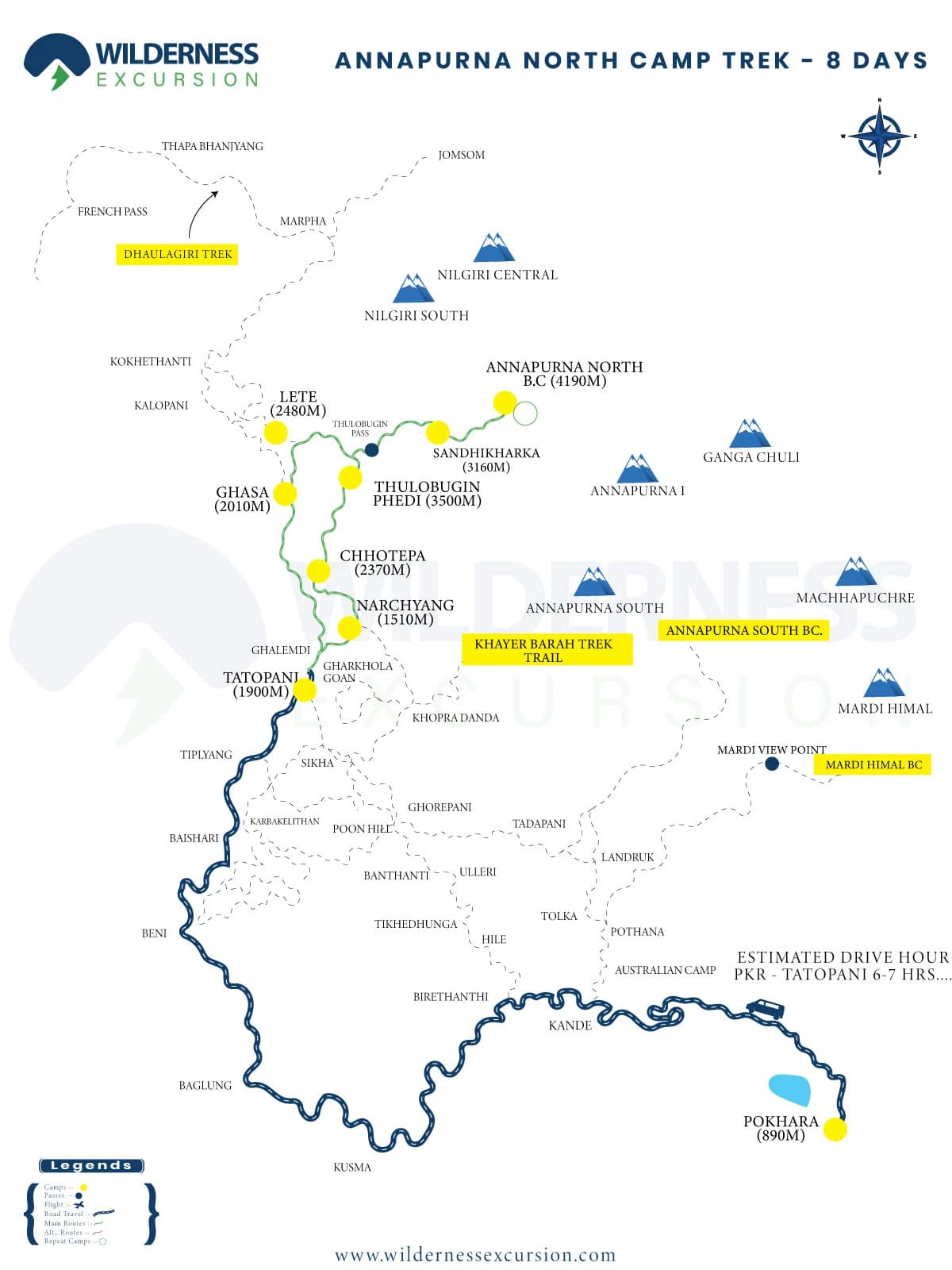
Expand allRide jeep to Tatopani from Pokhara, lunch break at Beni. And Trek to Narchyang village (2 Hrs). Overnight at Upper Narchyang 2140m.(Homestay)
Upper Narchyang to Chhotepa that takes 7 Hrs and walking distance is 14km or so. Trek through Lekhgaun, Ghalemdi, and Mristi Khola. Overnight at Chhoteopa 2369m.
6-7 hours of walk takes us to Sandhikharka. The walking distance is some 9km. Hike through Humkhola. Overnight at Sandhikharka
We trek to Annapurna North Base Camp today; that takes 7-8 hours and length is some 10 km trekking through Bhusket Mela. Overnight camp at base camp of Mount Annapurna
Discover around the North Annapurna Base Camp glaciers (4190m) and trek to Thulobugin Phedi (6 hrs-9.5km approx.)
Trek to Thulobugin Phedi and camp there for overnight stay.
Take a local jeep to Pokhara that takes some 8-9 hours of road drive. Escort to your hotel at Pokhara. Farewell dinner with your crew.
This is our standard itinerary. It can be customized or slightly changed if required considering your pace and trekking habit that cause a change of day-to-day plan.
Route Map
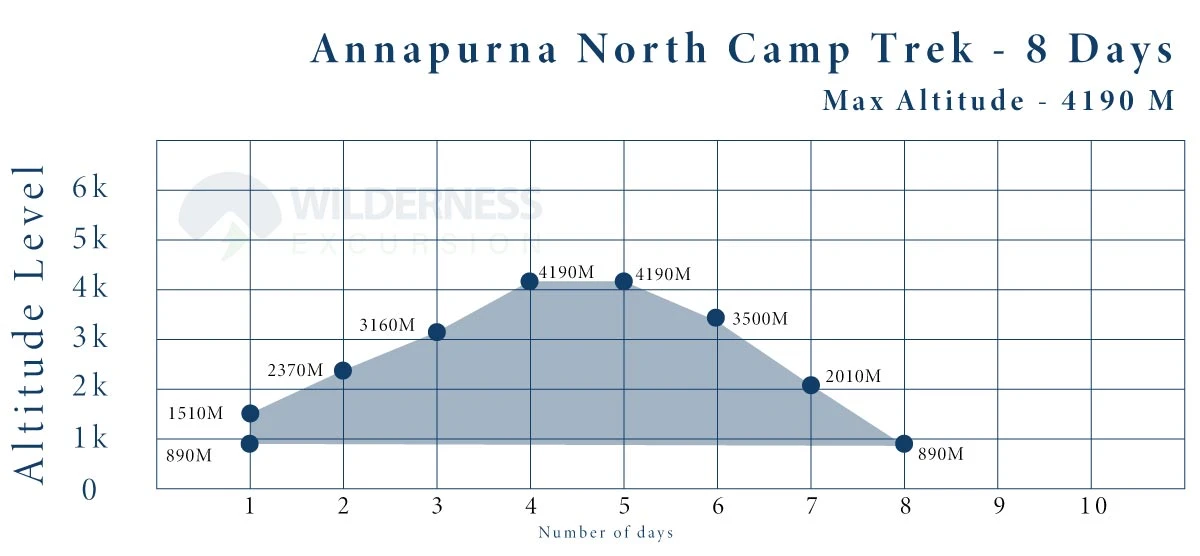
Altitude Chart
Still Confuse?
Download brochure or customize your trip.
Cost Details
Includes
- A registered English-speaking North Annapurna Base Camp trek guide.
- Meals: 7 breakfasts, 8 lunches, and 7 dinners.
- Tea, coffee, and fresh fruits during the trip.
- Homestay and basic lodging during the trek.
- Required trekking permits (ACAP entrance fees)
- Public ground transportation as per the itinerary.
- Guide fee with all his/her expenses.
- Taxes and documentation fees.
Excludes
- Accommodation, meals, and transfers in Kathmandu and Pokhara.
- Bar bills, beverages such as Coke, Fanta, and mineral water.
- Personal trekking gear, travel insurance, internet, and phone calls.
- Rescue operation charge in case of emergency.
- Porter service; one porter between two trekkers is suggested. (USD140)
- Tips for your guide and porter.
Add-ons & Options
At Wilderness Excursion, we offer a selection of extra services designed to enhance your North ABC Trek experience!
- Porter Service at USD 170: Let our local strong porters carry your gear so you can enjoy the breathtaking beauty of the North Annapurna Base Camp Trek. Each porter can support a maximum. 23 kg and can be shared by two trekkers.
- Kathmandu to Pokhara Flight USD 99: Air travel (25-minute flight which costs US$98 per adult / per flight)
- Pokhara to Kathmandu Flight USD 100: Air travel (25-minute flight which costs US$99 per adult / per flight)
- Tourist bus between Kathmandu and Pokhara: US$ 25: Allow us to manage your tourist bus seat bookings for seamless land travel between Kathmandu and Pokhara, saving you valuable time.
Dates & Availability
Select Departure Dates
Sep 2026
Oct 2026
Nov 2026
Dec 2026
Check our published date! If it doesn’t match, we are happy to customize your tour perfectly to suit your interests and needs, creating a unique travel experience for you
Essential Information
Things to know when trekking to Annapurna North Base Camp
Important notes
Trekking difficulty: The northern base camp of Annapurna is medium-hard for professional trekkers but may pose significant difficulties to beginners due to the unavailability of timely accommodation and suitable foods.
Trek duration: The itinerary to the northern base camp is 7 days, which can be customized to the trekker’s personal preferences.
Accommodation: Most of the places now accommodate teahouses and lodges, but some parts may require camping depending on the location and time.
Best time to trek: Trekking the north base camp is best done during trekking seasons from late March to early June and from September to November.
Avg trekking hours: On average, we trek 6-7 hrs a day for good rest and gradual acclimatization.
Total trekking days and drive day: The itinerary is for 7 days, but the total trekking will be for 6 days since we will be driving back to Pokhara on our last day.
Arrival and Visa in Nepal
Nepal provides an “on-arrival” visa with a quick and simple procedure. You can get your visas at Tribhuvan International Airport after applying at the Department of Immigration.
Once you arrive at the airport, follow these simple procedures for a tourist visa.
- Fill in the 'Arrival Card.'
- Fill in the online ‘Tourist Visa' form. You can fill it out online before you arrive at the Department of Immigration or use the kiosk machines upon arrival at the airport.
- Make payment at the bank according to your visa requirement (15/30/90 days).
- Get the receipt.
- Proceed to the immigration desk with your online form, payment receipts, and your passport.
- Hand in your documents to the immigration officer for visa processing.
On Arrival Visa Fee
- 15 Days – 30 USD
- 30 Days – 50 USD
- 90 Days – 125 USD
Trekking difficulty – Who is it for?
The northern base camp lies beside Annapurna I and was rarely known to trekkers, so the number of teahouses and trekking lodges was limited. Trekkers had to spend a few days in a tent, which was difficult for beginners and professionals who didn’t have any prior camping experience. But due to the recent development of teahouses near the northern base camp, Annapurna North Base Camp now accommodates more comfortable stays and resting points. So, the northern base camp is a beginner-friendly wilderness trek in the Annapurna region.
Altitude and acclimatization
The highest altitude during the whole trek is 4190m, which is 60 meters higher than the popular Annapurna Southern Base Camp. The trek officially starts from Narchyang at an altitude of 1510m for better and gradual altitude gain and ends around the same altitude of 1900m at Tatopani.
Table: - Altitude gained per day
| Trekking day | Altitude gained | Altitude difference |
| Day 01 | 1510 meters | 620 meters |
| Day 02 | 2370 meters | 860 meters |
| Day 03 | 3500 meters | 1130 meters |
| Day 04 | 4190 meters | 1410 meters |
| Day 05 | 2480 meters | -1710 meters |
| Day 06 | 2010 meters | -470 meters |
| Day 07 | 890 meters | -1120 meters |
Weather and seasonal conditions
The weather during the trek heavily depends on the season you’re visiting. For instance, during the spring season, early March can be really stable with sudden clear and crisp skies and heavy-to-light rain in minutes. While the monsoon and winter seasons are no-go zones for the Annapurna North Base Camp. The autumn season is considered the all-rounder trekking time for its stable and clear weather. So, depending on the season, month, and time, your weather experience may vary slightly.
The best option is to contact us and query in real time to know the weather in Kathmandu and generally in Nepal. Right before the departure or booking, you may contact us to know the weather in specific locations.
Accommodation Standards
Unlike the southern base camp, this trek leans more towards wilderness and remote trekking. So, in general, you may not find any luxurious hotels, and the only accommodation is in local teahouses or trekking lodges specifically made for a night's stay. While near the base camp, you may possibly require camping in tents, depending on the situation and whether lodges are available or not during the visit. So, overall, the only accommodation is teahouses and lodges, which have a two-in-one shared room and a small dining room with fitted heaters and a great view of nature. It may not be a luxurious night, but it will be the most comfortable night of your life.
Food and Drinking Water
Now it is quite tricky when it comes to food and drinking water. Although every camp in the Annapurna region follows a similar pattern of old diners with fixed menus and varieties, it may slightly differentiate when you trek higher towards the base camp. The food options are mostly fried or steamed, and the ingredients used are something that can be stored for a long time, unlike fresh vegetables. So, the more you gain altitude, the fewer your food options will be. But drinks are different: every lodge has access to a remote water supply from the mountains that is clean and drinkable, so hot drinks such as tea, coffee, hot lemons, and similar beverages are possible.
For drinking water, if you’re uncomfortable with tap water in lodges or trails, you can use purification tablets or portable gadgets to filter water and reuse the tap water.
Permits and entry requirements
The Northern Annapurna Base Camp is protected under the laws of the Annapurna Conservation Area project, which is similar to the Southern Base Camp. To enter the ACAP premises, trekkers must have conservation permits issued by the Nepal Tourism Board. Trekkers booked through the agency won’t have to hassle for permits since the agency takes care of basic requirements, but for those who are trekking independently, you can visit our website for more information regarding permits and fees.
Transportation and route access
After arriving at Tribhuvan International Airport, you can choose to fly directly to Pokhara International Airport. Or if you’re staying in Kathmandu for a night and have a brief meeting with the agency before departure, you will have two options: either take a flight to Pokhara, which takes about 20 minutes after take off, or take a tourist bus that departs at 7:00 AM, which takes around 8-9 hours. The rates are 99-100 USD per flight and 25 USD for a bus seat, respectively.
Annapurna Base Camp and Annapurna North Base Camp comparison
If you're having a dilemma on which trek to choose between Annapurna Base Camp and the Annapurna North Base Camp, read our article on a comparison guide between the Annapurna Base Camp and the North Base Camp.
https://wildernessexcursion.com/blog/annapurna-north-base-camp-vs-annapurna-base-camp
Annapurna North Base Camp Trek - 7 Days FAQs
The Annapurna North Base Camp is a 7-day trekking destination from Pokhara. With a total of 6 trekking days and a day of driving, the approximate average walking duration during the whole trek is 42-45 hours.
The trail to Annapurna North Base Camp is medium hard for beginners, while it may also pose some struggles to professional trekkers as well due to the limited availability of luxury accommodation.
The maximum altitude of the northern base camp is approximately 4190 meters above sea level, which is 60 meters higher than the southern base camp.
We recommend doing wilderness trekking, like northern base camp, during peak seasons from April to June or from September to November, depending on the choice of scenery.
The globally known Southern Annapurna Base Camp offers the closest and most stunning surroundings of peaks and Annapurna South but is really congested during peak seasons, making it hard to get a room in lodges without pre-booking, while the northern base camp offers a similar trekking experience with quieter trails and fewer crowds.
Yes, compared to other popular short treks in the Annapurna region, the northern base camp is known to a few adventure seekers. So, trails are mostly quiet with few crowds.
The north base camp is popular for a close-up, stunning view of Annapurna I, glacier lakes, valleys, and indigenous village trails. So you can expect a local cultural and natural blend of scenery similar to Southern Base Camp.
For a better success rate, yes, it is better to have prior trekking experience since we would be trekking at high altitudes above 4000 meters and on rough trails.
Although not every trek is suitable for beginners with ground-level experience, through simple fitness and an able body, we can organize such short treks for beginners as well.
Yes, there is an absolute possibility of altitude sickness on this trek, and not only on this trek, but most of the trekking destinations above a certain altitude carry the risk of altitude sickness. Our itinerary has been carefully planned for gradual acclimatization to let the body adapt naturally to changing environments.
Although there may not be a specific law for trekking in Nepal with a guide, the government and we advise and suggest that you hire trek guides for various reasons, mainly for your own personal safety and comfort as well
Hiring a guide has multiple benefits in itself; you get a local translator, a field leader, a trek coordinator, and a trekking partner who makes sure your journey is completed with comfort and success. To know more about hiring a guide and the fee structure, visit our website on hiring guides and porters.
Yes, in Wilderness Excursion, every trekking staff accompanying you is insured during the whole trekking duration.
The Annapurna North Base Camp is protected under the laws of the Annapurna Conservation Area Project (ACAP), so trekkers are legally required to obtain ACAP permits from the Nepal Tourism Board (NTB), Bhrikutimandap, Kathmandu.
Yes, any mandatory permits issued by the government of Nepal for legal trekking in Nepal must be obtained from the relevant authorities.
If you’re an independent trekker not tied to any agencies, then you can arrange your permits yourself, visit the Nepal Tourism Board in Kathmandu, fill out the forms, and complete the process to gain your trekking permits. But if you’re booked through an agency, they will handle the permit process as well.
Booking with us is quick and easy. Follow the given process, and book your next trip with us:
- Click “Book this trip."
- Fill out the form.
- Choose additional services.
- Make a 15% advance payment.
- Enjoy the trip.
When booking with a registered agency, there are multiple terms and conditions that also apply to cancellation policies and refunds. Check our website for details on different booking terms and conditions.
Yes, if you feel like you need to postpone your trek, we can reschedule depending on the date of departure. If the departure date is already near and all necessary arrangements are made, then you may need to contact us regarding possible postponement.
When booking a package trip, you’re required to make a 15% advance payment to confirm your trip.
If the trek needs to be canceled due to weather or emergencies, it will also depend on multiple scenarios: whether the trek has already departed or is near departure and whether full payment has been made. You can check out the cancellation policy on our website as well for different reasons and booking periods or directly contact us.
The price covers the basic cost, such as accommodation and food; ground transportation; the guide and their fees; documentation & taxes; and permits. Our price also includes complimentary items, such as tea, coffee, and fresh fruits.
We are not liable for your accommodation in Kathmandu & Pokhara, any beverages like cold drinks, personal gear, rescue operations, and guide tips.
The best practice is to separate 20USD per day and exchange it at a money exchange in Pokhara or Kathmandu
You will spend most of the nights in teahouses, lodges, and tented camps. So, prepare accordingly.
Teahouses and lodges provide basic food options, which are not specifically made for vegetarians only, but they do provide veggie options, though limited.
You can buy mineral water in lodges; the cost may vary depending on the region and camp.
If you have extra luggage that is not needed during the trek, you may leave it with the hotel you’re staying at, since most of the hotels provide storage facilities. If you’re in Kathmandu, you can also choose to leave your luggage with us, and we will keep it safe until you arrive.
The legal weight limit for a porter is near 20 kg, and anything more than that is not acceptable both legally and morally.
If you or someone in the group gets altitude sickness, the guide is trained for such situations, and the foremost step is to trek back to a lower altitude. Depending on the person's condition, if severe, then an immediate rescue operation will be conducted.
The best precaution is to trek gradually, adapting to gaining altitude and staying hydrated. If any symptoms are shown, coordinate with our trek guide, who will be responsible for contacting us, and we will take necessary steps.
Before tackling any difficult trekking trails or regions, you should have a light physical fitness regimen 1-2 months before trek departures. No need for heavy lifting or bodybuilding, but endurance and stamina are essential for trekking.
Yes, you should definitely have travel insurance that covers unaccounted losses on your side and for personal safety as well.
Since the north base camp passes through less touristy Himalayan communities, the local encounters feel more authentic. The major communities you will encounter are Gurung, Magar, and Thakali.
Nepal is a multiethnic country, where beliefs are countless and change with the communities you’re with, so the best practice would be to ask your guide when you’re in villages if what you’re doing is acceptable. For instance, take pictures of ceremonies or rituals so the trouble won’t bite you later.
The locals mainly depend on self-sustenance, farming, and animal herding, which have been their income source and lifestyle itself
Adventures Tailored for You


Need Help? Call Us+977 9851042153