The 13-day Manaslu Circuit encircles the entire Upper Manaslu Region, starting from Kathmandu. With a package cost of USD 950, the trek explores the hidden valleys, glacial lakes, and upper passes of Larkya La.


Manaslu Circuit Trek - 13 Days
.webp&w=3840&q=75&dpl=dpl_HCc9D1rQjzpLEeq9FyyGvkGQtxh8)
Duration
13 Days
Trip Grade
Medium Hard
Maximum Altitude
5160m
Group Size
Max 12 Person
Activities
Trekking and Hiking
Starts
Soti khola
Ends
Jagat
Best Time
March-June and September-November
Photos
Video
Introducing the Manaslu Circuit Trek
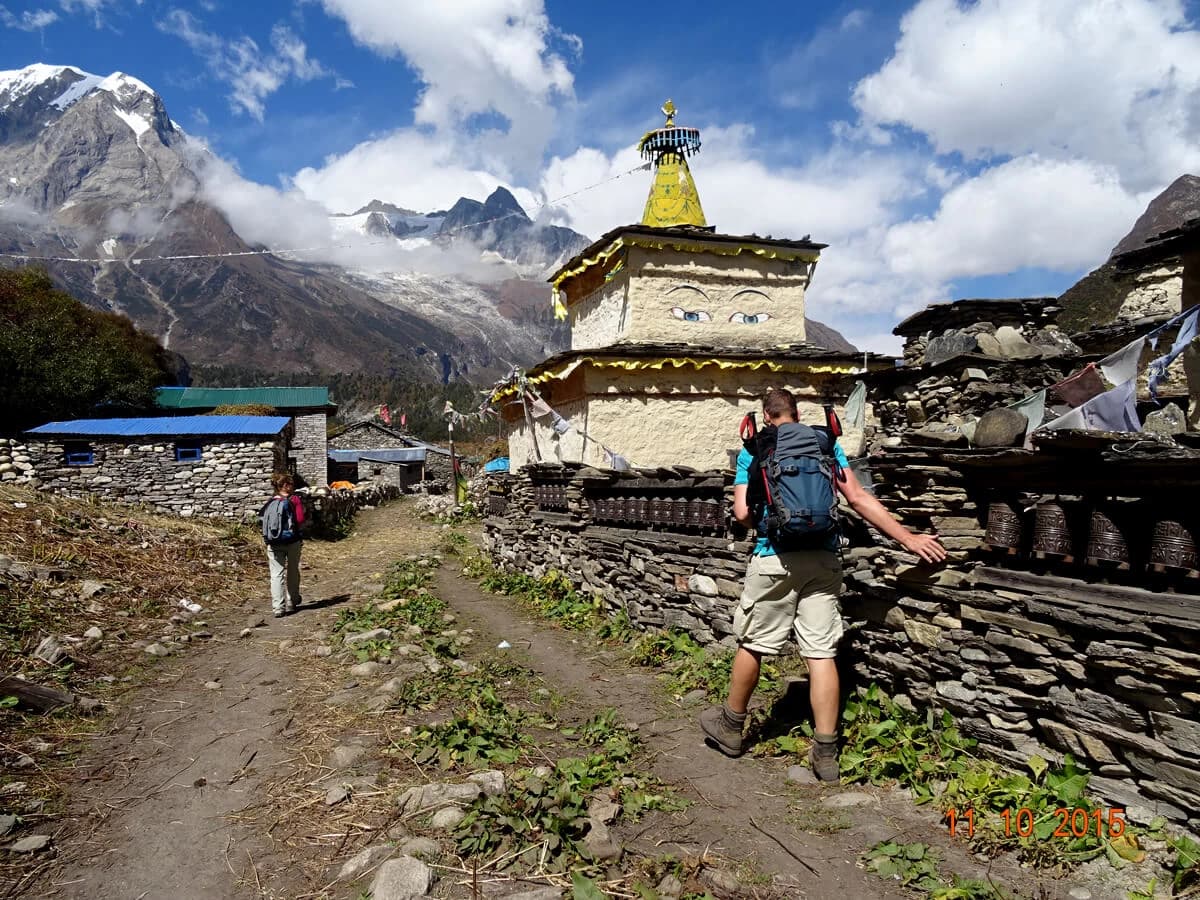
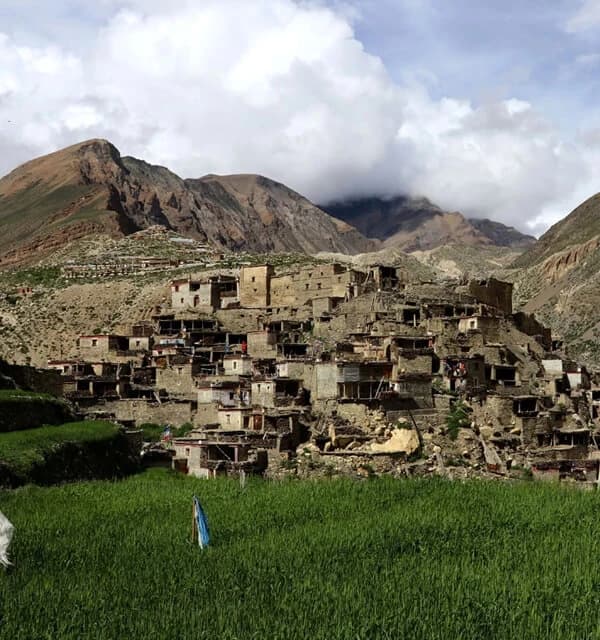
Located in the north-central part of Nepal, northwest of Kathmandu, near the Tibetan border, the trek moves counterclockwise from the Gorkha district, gradually heading north, crossing Larkya La (5160 m), and descending towards the west. Protected and conserved under the laws of the Manaslu Conservation Area Project, the Manaslu region is home to diverse flora and fauna, the captivating Himalayan range, and native settlements in the valleys.
The Manaslu Circuit trek offers a diverse journey that begins in the warm river valleys of Nepal and gradually rises into high Himalayan terrain. The trek starts in the Gorkha district, passing through villages in the sub-tropical zone. The region is strongly influenced by Hindu traditions, along with a mix of Buddhist traditions. The trail later follows the Budhi Gandaki River, moving through lush forests, terraced fields, and deep gorges as the landscape slowly changes with altitude. As the trek climbs higher, settlements reflect a stronger Tibetan-Buddhist influence, visible in monasteries, mani walls, prayer flags, and traditional stone houses along the trail. The journey reaches its high point at Larkya La (5,160 m), offering wide Himalayan views and completing a culturally rich and geographically varied circuit trek.
Historical importance of the Manaslu Circuit and its trail
Most trekkers believe that trails exist because of tourism, which is not completely false since modern trails of popular destinations exist for tourism and adventure. But the hidden truth behind the vast trails that cover every part of the Himalayas is something else. Unlike in other countries, Nepal’s development, or rather adaptation to modern tech and transportation, was late and really uneven. Due to the difficulties of geography in the Himalayas and Nepal’s incompetence itself, most of the people or settlements depended on these trails for survival and sustenance through daily life; in fact, these very same people were the ones who made these trails to travel.
The same goes for the Manaslu Circuit Trails, and these trails were not just means of travel but held a sacred belief of the Nubri people. Manaslu is associated with spiritual guardians and hidden sacred landscapes. The entire upper valley is regarded as a beyul similar to Tsum Valley. This explains why trails are covered with prayer flags, Mani walls, chortens, and monasteries.
The Manaslu valley didn’t exist because of tourism, but the valley had long existed before any form of monetized tourism. The upper valley of the Manaslu was inhabited by the Nubri people, who are believed to have migrated before modern Nepal and started their settlements in the nearby pasturelands. The trails were used for traveling and salt trading, where people of Nepal traded with Tibet through the Larkya Pass, as the pass was a trade corridor before the trekking destination.
SO, when you are trekking the Manaslu, you are not walking a path that was made simply for money; these paths are the history of many people, which connect multiple villages and settlements. What you’re going through is centuries of history and preserved ancestry.
Highlights of the Manaslu Circuit Trek
- Subtropical Sal and Schima forests in lower river valleys.
- Rhododendron and oak forests in the mid-hills.
- Pine, fir, and birch forests in upper Manaslu.
- Juniper shrubs and alpine grasses near Larke La Pass.
- Medicinal and alpine herbs, including high-altitude species.
- Himalayan tahr and blue sheep (bharal) in alpine zones.
- Snow leopard (rare and symbolic species of the region).
- Musk deer and Himalayan marmots.
- Himalayan black bears and leopards in the lower forests.
- Himalayan griffon vultures and pheasants.
- Lower Manaslu shows a strong Hindu influence mixed with Buddhism in the Gurung and Ghale villages.
- Upper Manaslu reflects Tibetan Buddhist culture, with monasteries, mani walls, and prayer flags.
- Traditional festivals like Lhosar (Tibetan New Year) are widely celebrated.
- Buddha Jayanti and local monastery ceremonies mark the Buddhist calendar.
- Seasonal village festivals and harvest rituals reflect a deep spiritual connection to nature.
Package cost & Booking options for the Manaslu Circuit Trek
The typical Manaslu Circuit Trek costs approximately USD 900 to USD 1200 according to the length of the tour and package mode. Wilderness Excursion offers a package price of USD 925, which is not even our lowest price, since our prices drop with each additional trekker in the group. The quality of service remains constant, with additional benefits like our FOC policy and complimentary services.
FOC (Free of Cost) Policy:
- 50% off in the trekking package for an international tour leader for a group of 8 to 9 people.
- 100% off in the trekking package for the international tour leader if the group is 10+ pax.
Why book the Manaslu Circuit Trek with Wilderness Excursion?
Wilderness Excursion is a registered and certified trekking agency in Nepal. We manage all kinds of trekking routes and groups of different sizes with a 99% success rate since 2014. With a decade of experience, we can ensure that your trekking experience with us will be memorable.
There are multiple hidden and upfront benefits of booking your trip to the Manaslu Circuit Trek with Wilderness Excursion. Some of our prominent highlighted benefits include our exclusive Free of Cost (FOC) policy.
- We take care of all required Manaslu Circuit permits and TIMs registration, making your trek preparation simple and hassle-free.
- Our professional local guides are highly familiar with the remote trails, changing weather, and rugged terrain of the Manaslu region.
- All accommodation, meals, and transportation are arranged in advance, ensuring a smooth and well-organized trekking experience.
- You don’t need to worry about planning—we handle every detail, allowing you to fully enjoy the natural beauty and journey.
- Our itineraries are carefully designed with proper acclimatization and gradual pacing, which is especially important for crossing high passes like Larkya La.
- Our guides assist you in connecting with local communities, traditions, and daily life, adding cultural depth to your trek.
- All guides and porters are fully insured, trained, and equipped, which is essential for safety in remote areas like Manaslu.
- Certain sections of the trek require restricted area permits and local fees—we manage all paperwork and official requirements on your behalf.
- Our experienced team provides valuable insights into local culture, religion, and the Himalayan lifestyle, enriching your overall experience.
- Wilderness Excursion also offers a special free-of-cost policy under specific conditions, adding extra flexibility and value.
Packing List for the Manaslu Circuit Trek
Packing for the Manaslu Circuit Trek is a bit different compared to short treks. Unlike the base camp trek up to 4000 m altitude, where basic gear might be useful, the Manaslu Circuit Trek passes above 5000 m, which is a technical trek.
Here are some basic to advanced packing lists, especially for the Manaslu Circuit Trek, from daily wear to gear and necessary medicine and sanitary items that are required when trekking in Nepal
Daily Wear
| S.N | Items | Q.N | Why does it matter? |
| 1 | Moisture-wicking t-shirts | 2 | Keeps sweat away during the day. |
| 2 | Trekking pants | 2 | It's comfortable and dries fast. |
| 3 | Fleece or light jacket | 1 | Mid-layer warmth. |
| 4 | Down jacket | 1 | Critical for high-altitude camps. |
| 5 | Underwear & Sportswear | 2-3 | Breathable and quick-dry. |
| 6 | Trekking Socks | 2-3 | Prevents blisters. |
| 7 | Thermal base layers | 1-2 | Essential for cold nights/mornings. |
Essential gears
- Backpack (40-60 L): Enough space for packing all the basic gear and equipment needed during the day hike and the Larkya Pass.
- Sleeping bag: A sleeping bag is mandatory in both seasons. Although lodges and teahouses provide you with quilts and blankets, in cases of extreme cold during the autumn season, sleeping bags can be life-saving.
- Trekking poles: Trekking poles can be knee-saving on uphill sections and especially on downhills, since the poles absorb most of the pressure, making it easier and more comfortable to hike down.
- Headlamp: Most villages and camps have electricity, but it is not as stable or consistent as in towns. The village paths and nearby trails still need headlamps or handheld torches at night.
- Water bottles (2L): Never forget to carry water bottles; staying hydrated is the key to preventing possible physical threats.
Layering outfits
Instead of heavy clothes, focus on layers.
- Base & mid layers: Wear thermal sets on top and bottom with layered trekking pants and a fleece jacket to keep warm in the morning and night after crossing 2500m.
- Top layer: waterproof windbreaker to avoid cold air.
- Others: Gloves, beanies, mufflers, and neck gaiters.
Electronics
- Mobile Phones: Do not forget your mobile phone to keep you company and take memorable photos of your journey.
- Cameras: For more professional photography.
- Power banks: Charging is limited at higher elevations, so pack one with you every time and keep it fully charged whenever possible.
Sanitary and personal care
Basic but important, especially in remote conditions.
- Toothbrush & toothpaste
- Wet wipes/tissue paper
- Hand sanitizer
- Sunscreen (SPF 50+)
- Lip balm
- Basic first aid kit
- Quick-dry towel
- Moisturizer
You may not realize it, but packing for a trek is really complex. Packing more than required will burden you with unusable materials, but underpacking will do the same. Knowing the unique characteristics of the trek and the general environment in the Himalayas is key to deciding what to pack. If you would like to know more about what to pack when trekking in any part of Nepal, check our clothing and gear list page, which covers such key details.
Trip Gallery
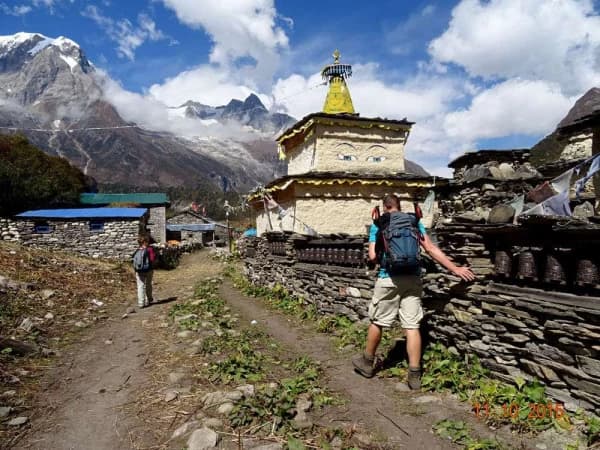
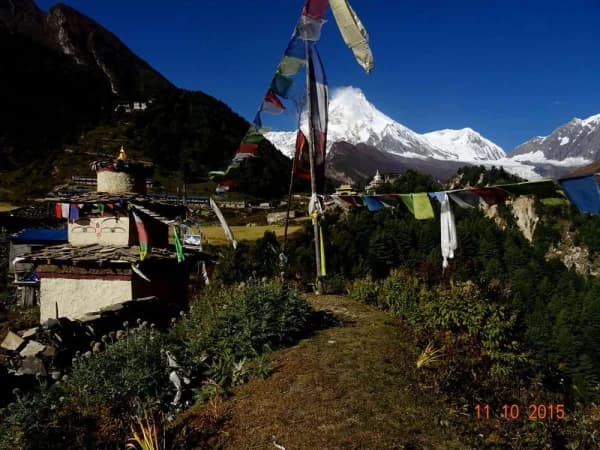
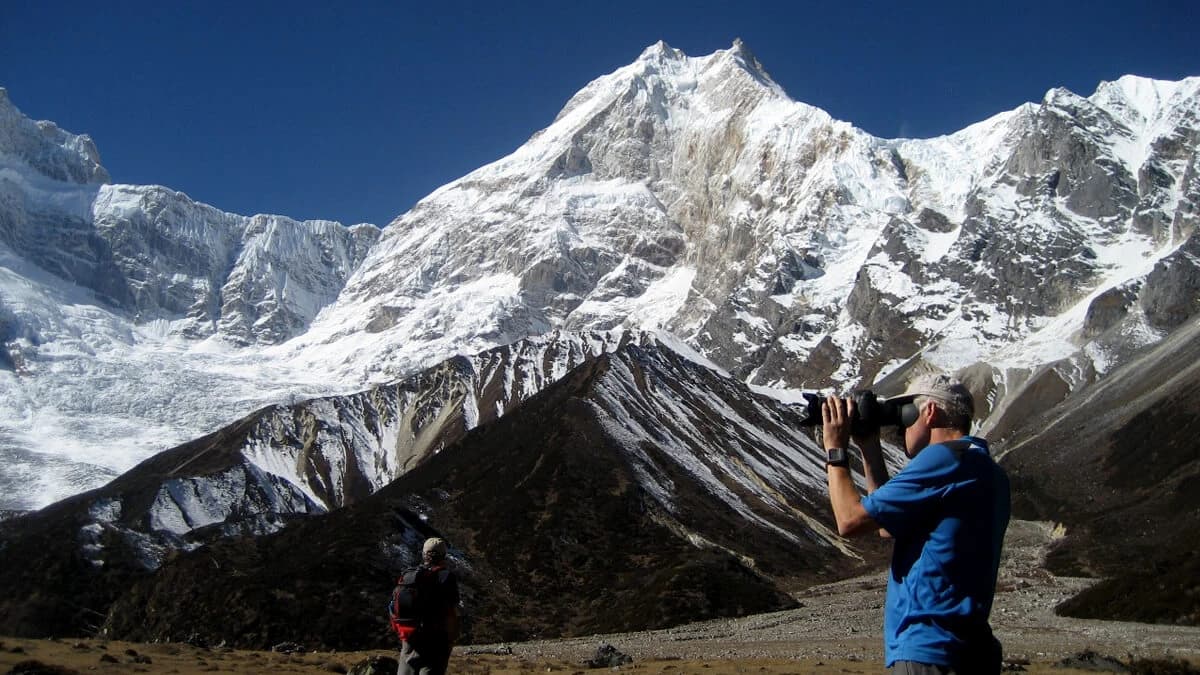
Itinerary
Expand allMain activity: Now, you’re ready to pack up and begin the very first day of our Manaslu Circuit Trek with a drive out of Kathmandu. At 6 AM, your assigned Manaslu Trek guide from Wilderness Excursion will pick you up from the lobby, and together you’ll head to Machha Khola (elevation 900m). The journey covers 162 km and takes about 8 to 9 hours in total.
The first leg of the drive—5 hours to Tari Bensi, located 115 km from the city—is smooth and paved, offering plenty of time to relax. From there, the road to Machha Khola becomes bumpy and rough for the remaining 45 km.
Trip Highlight of the day: Scenic drive through the small town, teracced farm lands. You’ll spend the night at a guesthouse in Machha Khola. Meals included: Lunch and Dinner.
We cross the Manaslu Permit Checkpost, entering the Manaslu restricted area at the village of Jagat; now you begin hiking through the rough, hilly terrain to reach Khorlabesi. Beyond Khorlabesi lies Tatopani, known for its natural hot water springs—feel free to relax at one of the teahouses there. Next, walk along a forested ridge before crossing a suspension bridge over the Budhi Gandaki River. Continue following the itinerary through dense forests, where you might encounter the fascinating Himalayan mules. Upon reaching Dovan, stop to enjoy your lunch for the day arranged by our guide.
Keep moving, and as you ascend from there, you’ll be rewarded with adventurous views of the surrounding landscape. After covering a total of 19 kilometers from Machha Khola on our 2nd day of the Manaslu Circuit Trek, you’ll finally arrive in Jagat, where you’ll stay overnight.
The journey from Jagat to Deng is as culturally enriching as it is scenic. Covering roughly 20 kilometers in about 8–9 hours, this hiking segment offers not only stunning views of mountain ranges like Shringi Himal but also deep immersion into local village life. Your first stops are Sirdibas and Philim, where you can stroll through terraced farms and breathe in the fresh mountain air. A well-earned lunch awaits at Chisapani.
For culture enthusiasts eager to learn about local ways of life, the Tibetan-influenced traditions here offer plenty to explore in your Manaslu Circuit Trekking. Pay attention to the villagers’ primary livelihoods—agriculture and animal husbandry—and sample local foods made from barley, maize, and oats, along with regionally grown fruits and nuts.
After lunch, continue through Pewa village and a small campsite before arriving at Deng, a modest town where you’ll settle in for an overnight stay.
Depending on the itinerary of the 13 day, the day plans to trek from Deng to Namrung, covering a distance of 17 km in about 7 hours.
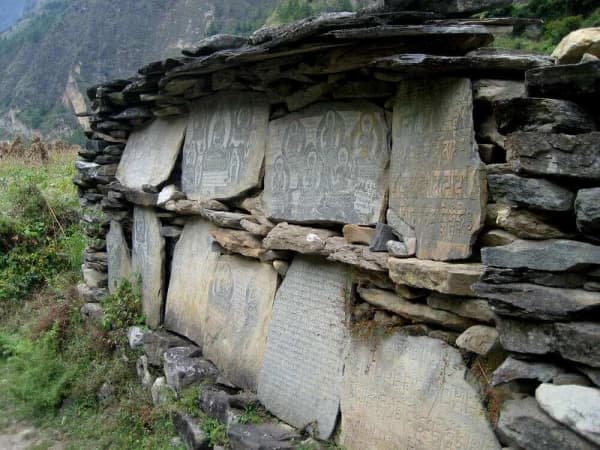
The journey begins early in the morning with ascending hills and crossing a river as part of the hiking route. Along the way, you'll pass through villages such as Rana Gaun, Biihi Phedi, Ghap, and Ghapsya, where you can witness mani stones inscribed with Buddhist mantras—a unique opportunity, as the local villagers regard these stones as deeply significant to their Tibetan culture and religious beliefs.
The trek to Manaslu Circuit continues with an adventurous stretch through dense forests, where the sounds of wild insects and mules accompany you until you reach Namrung for an overnight rest.
The day is centered on soaking in the stunning mountain scenery, with the main highlights being the magnificent views of Himalchuli, the Shringi Himal Range, and Mount Manaslu itself.
Your trek begins in Namrung, passing through Lihi and Sho Gaun, before reaching Lho Gaun—a beautifully nestled village surrounded by significant cultural monuments. Although the distance from Namrung to Lho Gaun is only 10.5 km, the awe-inspiring peaks and the long stone mani wall make the 5-hour hike a truly rewarding part of the Manaslu Circuit trek.
You’ll pause for a lunch camp with the remaining time, or if you wish, you can take an optional hike to Ribung Gompa - perched on a hilltop in Lho village at 3,180 meters, Ribung Gompa offers one of the most iconic, postcard-perfect viewpoints of Mount Manaslu in its circuit route.
Your overnight stay will be in Lho Gaun.
Leaving the beautiful village of Lho behind, the Manaslu Circuit trek resumes through the walking trails of Shyala village at 3500m. The height is a perfect viewpoint to look at the eighth-highest peak – Mt. Manaslu. Shyala also provides the start point of the Pungyen Gompa Day Hike.
Hike farther from Shyala toward Samagaun, one of the most beautiful villages. This is perhaps the most remarkable cultural immersion part of the Manaslu Circuit Trek for many trekkers. The journey is short today, and an enjoyable, pleasant, easy trail, with only an 8.5 km distance to cover from Lho Gaun to Sama Gaun. Relax at a guesthouse to stay overnight.
The purpose of this day is to acclimatise. The most important step on the Manaslu Circuit Trek to prevent Acute Mountain Sickness (AMS) is to allow a rest day in Samagaun (3,520 meters). Before you climb higher toward Larkya La Pass (5,106 meters), it helps your body make more red blood cells and adapt to the low-oxygen environment.
The first place to acclimatize to the Manaslu Circuit region is Samagaun. If you choose to climb, you can go to the Manaslu Base Camp at 4800m altitude and return in 7-8 hours, but the main purpose of the day is to rest and recharge the body in preparation for higher elevations in the days that follow.
Alternatively, you can go for a day hike to Pungyen Gompa, which provides the best view of Manaslu. If you would prefer a shorter trip, you might like to go to Birendra Lake. Overnight at Samgaun
Another short day of your Manaslu Circuit begins from Samagaun, because of the altitude, with time to go via the iceberg-covered Birendra Tal (3530m) under the Manaslu Glacier, wade the exit stream depending on the time of year, and drop down to pick up the main trail from Sama to Samdo. Easy walking through yak pastures up a broad valley with long mani walls, marmots in April but not in November, standing on their burrows. Finally, leave the tree line behind, although low-lying juniper is all around, climbing to a ridge and dropping to cross the Budhi Gandaki on a wooden bridge.
It takes some time to reach the White Kani above, but immediately behind is Samdo (3860m), a very picturesque village dedicated to yak herding, so much so that there are more animal and fodder shelters than human accommodation. Lodges are Chez Kyrang, Yak Lodge, Tibetan Twins, comfortable although likely to be cold at this altitude. Side valleys and Samdo Peak call out for afternoon wandering, but take a jacket as cold wind can come up at any time.
The Larkya La trail is ahead up the valley and to the left. You can see the main track for Tibet over the Larjyang La (Lajyung Bhanjyang, 5098m) sloping up to the right from the Larkya La trail, and you can make an excellent afternoon acclimatization walk of 4-5 hours return to 4500m up this trail, seeing lots of blue sheep and yaks and entrancing views, but the pass itself is a full-day trip. The first village and road in Tibet is about 2 hours beyond the pass, with access currently blocked by China even for locals. There is a lot of Chinese and Tibetan alcohol and food for sale in Samdo.
The trek from Samdo to Dharamsala (4460 m) is the most scenic stretch of the journey before reaching the Larke Pass (5160m). Throughout the route, the magnificent Samdo Peak towered behind us, and I simply could not get enough of it. Along the way, marmots, hawks, and even blue sheep (bharal) are grazing near the campsite.
Dharamsala has three very basic guesthouses. The rooms are little more than long metal structures divided into small compartments, each containing nothing more than a bed on the floor. That is about it. After lunch, we can go hiking around or above the campsite that offers great photo and video opportunities.
The night here can be bitterly cold, so most people stay indoors in the dining area, playing cards or reading. Dinner is usually served early, at around 6 p.m., because the next morning we have to wake up at 4 AM and leave between 4:30 and 5 AM.
After dinner, we go to sleep early for the next departure at dawn. This is the highest elevation (4460 m) where you sleep on the Manaslu Circuit Trek arranged by Wilderness Excursion.
We wake at 4 AM as planned, pack and grab the packed lunch, and leave at dawn. An early start is important to avoid a highly windy afternoon at Larke Pass at 5160-meter elevation. Before that, we have to check the snow there to ensure that the pass is still crossable. Climb steadily over the ridge behind Dharamsala and beside the large lateral moraine of the Larke Glacier. The climb is gradual, moderately difficult, but it is long and rocky underfoot, particularly as you top the moraine. Look for cairns and metal snow poles, which assist route finding if the trail is covered by snow.
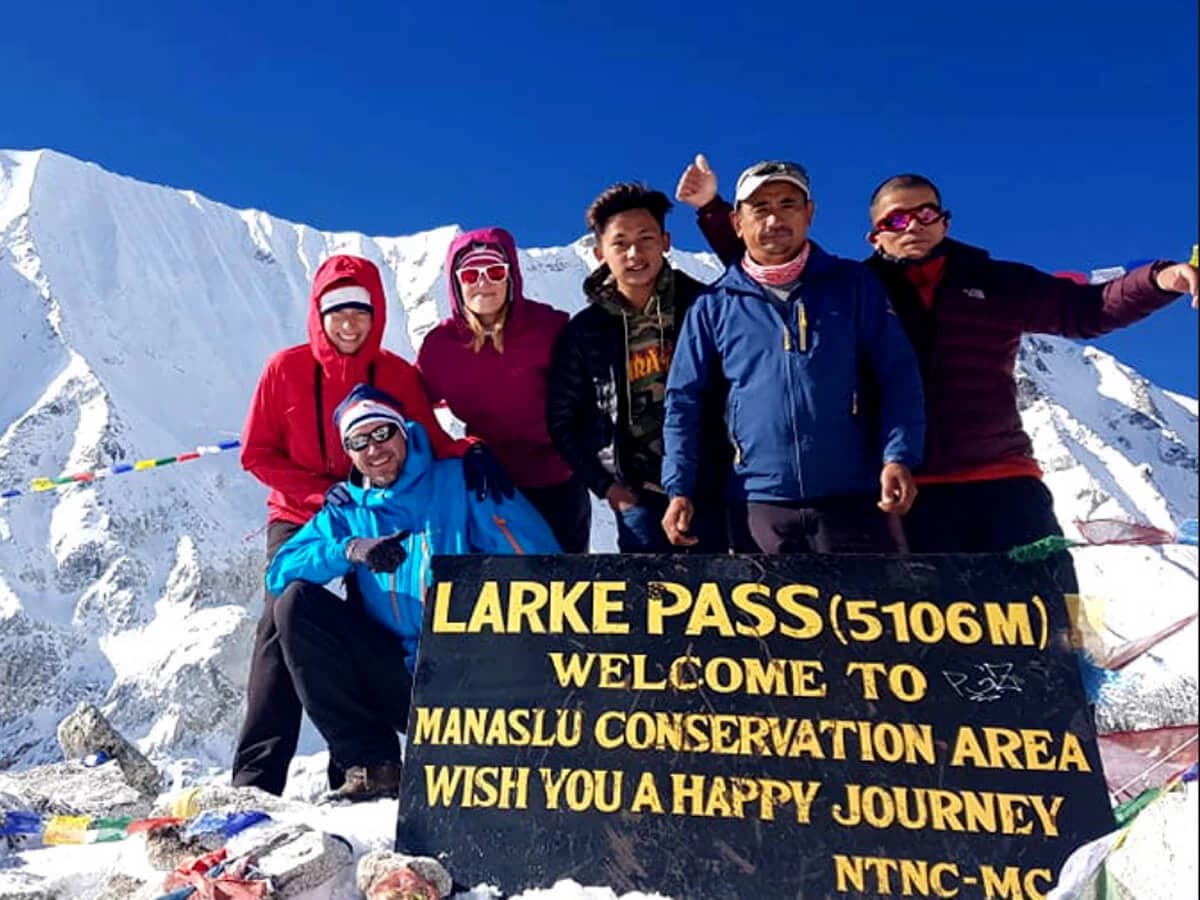
After some 3 hours of final tiring ascent to the left up to Larkya La Pass (5160m), marked by prayer flags and a signpost. It can be very cold and windy, with a risk of exposure if under-equipped or unwell; they need care and observation by the guide and assistants.
Now, the view is unbelievable: The peaks to the west are Himlung (7126m) near Tibet, Kang Guru (6981m), and Annapurna II (7937m) in the Annapurna Range. Trek west on a high moraine ridge exposed to wind for some distance, on the right side of a deep gully, then drop steeply on loose scree, eventually traversing left on more steep scree. There are several places where snow or ice would make this treacherous; a descent trekking boot and ice-spike is highly suggested with a trekking pole.
Make a long descent on loose gravel to a more level area with grassy moraine, where the angle eases. The track now runs left of the large lateral moraine, rocky at times, in a widening and beautiful valley all the way to very scenic Bimthang (3720m; ‘plain of sand’), a descent of 1400m in about 3hrs. The views during the descent are huge – icefalls and mountains in all directions, a medial glacial lake (Pongkar Tal) between the Pongkar and Salpudanda Glaciers, and the joining of these two glaciers with a third glacier to form the Bhimdang Glacier, whose lateral moraine towers over Bimthang. The new chalet-style Hotel Ponkar Mountain is the first lodge. You may like to celebrate the success of Larke Pass (5160m) on the Manaslu Circuit tonight (alcohol is not recommended).
Walk south below Bimthang behind the moraine wall for some time before crossing the Bhimdang Glacier, which can be loose underfoot. Climb up the far moraine wall quickly to avoid stone-fall and enter some of the best forests in Nepal. If you are in rhododendron season, the mauves, reds, pinks, and whites are stunning amongst the huge pines, and the views of the back of Mt Manaslu are superb. The Manas Circuit route part two, now descends rapidly along the true right bank of the aptly named Dudh (‘milk’) Khola through a bhatti at Hompuk (3420m) in a forest clearing. Gentle riverside walking continues rapidly to Karche (2700m; Karache, Surki Khola, Suti Khola) for lunch after about 3.5 hours.
This would be a great place to spend a night, with Saat Kanya Hotel or Himalayan Cottage chalets owned by the same Bimthang man. In the next hour, you will see many signs of a glacial flood, with tree trunks smashed and banks undermined, the track becoming quite rough. Climb steeply over a ridge and drop to Gurung Goa (2560m, Gho), the first real village since Samdo. There are many new lodges now.
After morning breakfast, we drive to Besishahar in a 4WD public jeep. It will be a 50 km drive on an unpaved road, rough and challenging, which will take some 5 hours. We stay at Besishahar. Enjoy a hot shower after a long hike and several nights in basic lodges without a proper hot bath. Enjoy and celebrate your last day of the Manaslu Circuit Trek. Overnight stay in Baranda Restro or Gateway Himalaya.
After our breakfast at Beshisahar, we take a comfortable bus ride to Kathmandu. This will be some 5 hours drive to Kathmandu. It is possible to transfer to Pokhara if you would like to end there. Manaslu Circuit Trek concludes now, farewell friend!.
Join our fantastic 13 Days Manaslu Circuit Trek with a carefully designed itinerary and an inclusive package trip cost with bucket list comprehensive services, including a local guide, trekking permit, and conservation fees, with all other necessities.
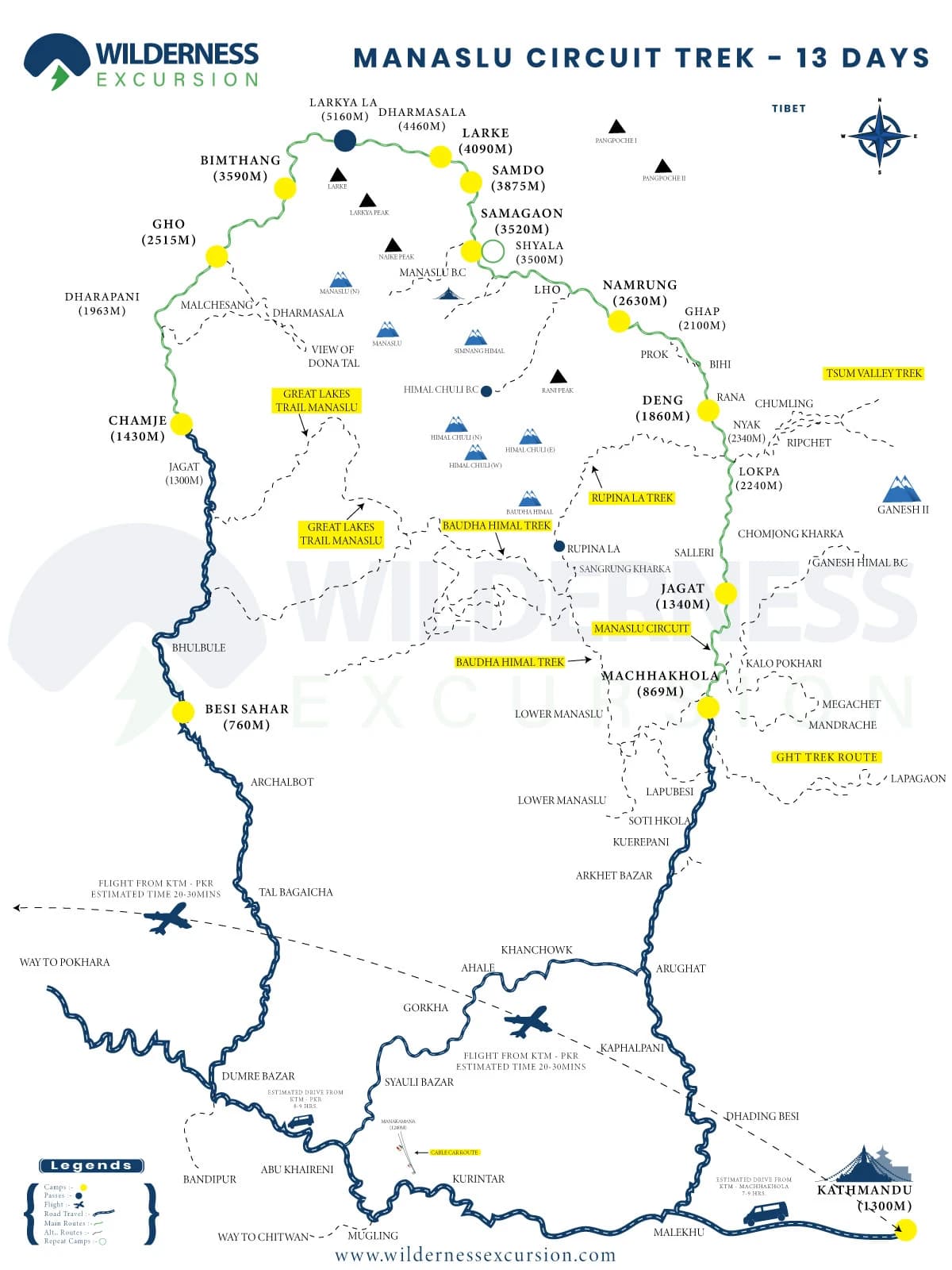
Route Map
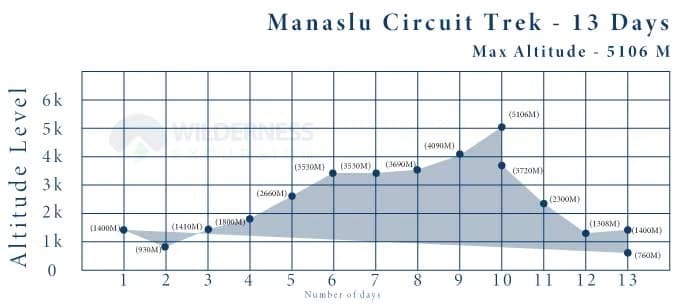
Altitude Chart
Still Confuse?
Download brochure or customize your trip.
Cost Details
Includes
- A licensed private guide for the Manaslu Circuit Trekking.
- Ground transportation by public bus to and from the tour.
- 12 nights of lodge accommodation on a twin-sharing basis during the trip.
- Standard full board meals: (12 breakfasts, 13 lunches, and 12 dinners), one main course per meal.
- RAP (Manaslu Restricted Area) Permit for Trekking
- Manaslu Conservation Area Fees.
- Chum Nupri Municipality entrance permit.
- Guide fee and other expenses for the 13-day Manaslu Trek.
- Insurance coverage for your support staff.
- Taxes and documentation charges.
Excludes
- Airport transfer, meals, and accommodation in Kathmandu
- Additional tours and meals that are not mentioned
- Hot and cold table (tea, coffee, beverages) and bar bills.
- Personal bills such as internet and laundry.
- Personal travel insurance and trekking gear.
- Emergency evacuation (which will be done in your account)
- Private porter to carry your main pack.
- Tipping your guide and porter.
Add-ons & Options
Wilderness Excursions brings over 13 years of outstanding trekking experience and decades of expert leadership on Nepal’s iconic trails. To elevate your Manaslu Circuit Trek, we now offer exclusive add-ons—tailored enhancements designed to make your adventure even more unforgettable
- Porter Service USD 260: Let our professional porters lighten your load! We carry one main pack (max 25kg) shared between two trekkers, so you can fully enjoy the breathtaking beauty of the Manaslu trek—without the weight of a heavy backpack, and it will cost USD 260 per person.
- Hotel booking in Kathmandu USD 45 per Double and USD 35 per Single: Let us assist with your accommodation booking, which saves you time at a reasonable cost.
- Private Jeep Service to Machha Khola USD 165: Upgrade your land transportation to a private Jeep for comfortable travel. Cost can be shared by two trekkers or as per the number of participants.
- Chymaje to Kathmandu by Private Jeep USD 185: 4WD private jeep to return after the Manaslu trek, whether you would like to end the trek in Kathmandu or Pokhara.
Dates & Availability
Select Departure Dates
Oct 2026
Nov 2026
Dec 2026
Check our dates published for the Manaslu Circuit Trek group departure. If the dates do not match, we are happy to customize your tour perfectly to suit your interests and needs, creating a unique travel experience just for you
Essential Information
Things to know when trekking the Manaslu Circuit Trek
Important notes
- Trekking difficulty: The Manaslu Circuit Trek is possibly hard for beginner trekkers due to its long trekking days and the possible high-altitude pass of Larkya La at 5160 m.
- Trek duration: The standard Manaslu Circuit trek is 13 days for proper acclimatization and stable pacing, but if you love challenges, then check out our 10-day Manaslu Circuit Trek for more hyper pacing.
- Accommodation: Although the Manaslu Circuit Trek is an extremely remote area of trekking, facilities are relatively developed in places like Samagaun, which is the most popular and densely populated village along the trail.
- Best time to trek: To make the most of the Manaslu Circuit Trek and have a successful ascent of the Larkya La, only trek in peak seasons from April to May and September to November for stable weather and clear views.
- Avg trekking hours: On average, you trek for 6-7 hours a day, depending on the nature of the hike.
- Total trekking days and drive days: The itinerary is 13 days, but you will spend the first day of the trek and the remaining 2 days of the trek driving from one trekking point to another.
Arrival and Visa in Nepal
Nepal provides an “on-arrival” visa to travelers, meaning you can apply for your visa after arriving at the TIA (Tribhuvan International Airport). Another option is to apply for an online visa on the Department of Immigration's website.
Once you arrive at the airport, follow these simple procedures for a tourist visa.
- Fill in the 'Arrival Card.'
- Fill in the online ‘Tourist Visa' form. You can fill it out online before you arrive at the Department of Immigration or use the kiosk machines upon arrival at the airport.
- Make payment at the bank according to your visa requirement (15/30/90 days).
- Get the receipt.
- Proceed to the immigration desk with your online form, payment receipts, and your passport.
- Hand in your documents to the immigration officer for visa processing.
(Immigration, 2026)
On Arrival Visa Fee Structure
- 15 Days – 30 USD
- 30 Days – 50 USD
- 90 Days – 125 USD
(Immigration, 2026)
Trekking difficulty – Who is it for?
To answer simply and straightly, yes, the Manaslu Circuit Trek is significantly more difficult than other, simpler treks. You trek the whole upper region of Manaslu for 12 consecutive days and have 1 rest day, which requires a standard level of physical fitness. Although the region is well-developed and trails are maintained for a comfortable journey, the long trekking days and high-altitude pass of 5,160 m can be physically tiring.
So, the Manaslu Circuit Trek is only recommended for people with prior experience and who have certain levels of altitude knowledge. Why? From the general public's view, altitude knowledge is not significant, but only people with experience know how hard it is to trek at high altitudes and the possible risks of altitude sickness. For beginners, we suggest the Manaslu Circuit Trek after considerable physical fitness training or small hiking habits, since prevention is better than a cure.
Trekking difficulty for different beginner age groups
- Age 10 to 12: Strenuous, only recommended after careful planning and coordination with the agency.
- Age 13 to 18: Hard, possible if physically fit and no physical disability.
- Age 19 to 30: Medium-hard.
- Age 31 to 59: Hard, but also possible if physically fit.
- Age 60 to 70: Strenuous; recommend a customized itinerary plan for better acclimatization.
- Age above 70: Contact us to plan your comfortable Manaslu Circuit trek.
Altitude and acclimatization
Our standard itinerary of the Manaslu Circuit Trek follows a carefully knit acclimatization plan with stable and proper pacing. For the first few days, your trekking duration is a bit longer, and after crossing the altitude of 2600 m, trekking duration is short for proper acclimation with rest days before ascending the Larkya La. Below you can find a table plan for altitudes on each day, with altitude gained and altitude difference from the previous camp.
Table: - Altitude gained per day
| Trekking day | Altitude Level | Altitude Difference |
| Day 01 | 869 meters | -431 meters |
| Day 02 | 1340 meters | 471 meters |
| Day 03 | 1860 meters | 520 meters |
| Day 04 | 2630 meters | 770 meters |
| Day 05 | 3520 meters | 890 meters |
| Day 06 | 3520 meters | Nil |
| Day 07 | 3875 meters | -215 meters |
| Day 08 | 4090 meters | 215 meters |
| Day 09 | 5160/3590 meters | 1070/-500 meters |
| Day 10 | 2515 meters | -1075 meters |
| Day 11 | 1430 meters | -1085 meters |
| Day 12 | 760 meters | -670 meters |
| Day 13 | 890/1400 meters | 130/640 meters |
Weather and seasonal conditions
Forecasting weather is possible using modern technology, but always trust the words of a wise old man. After crossing a certain altitude level, the weather can be extremely unpredictable, especially the drifting clouds in the alpine region and sudden bursts of heavy fog. So, how to pick the right time to view the mountain ranges and alpine peaks?
The answer is the seasonal months, which were picked after years of consistent trekking and research. Spring and autumn seasons are mostly preferred for trekking for their distinctive features, such as spring for viewing the mountain ranges with floral foregrounds, which is best for short and scenic treks, and autumn seasons for long adventure treks, which require crossing high passes above 5000 m, since autumn has stable and consistent weather. Although spring is also peak trekking season, March and early April can be tricky, with sudden rain and clouds, but from early April to May, it can be clear, with colorful forests and the Himalayas in the background.
Note: Sometimes the mountains won’t open early in the morning, but do not be disappointed and head to the lodge; clouds will drift, and at one time, the mountains will open up, even if it’s for a brief second or a minute.
Impact of climate change on trekking in 2026
Climate change is a global issue, and its biggest impact is seen in the mountains, which were the pride of many netizens and are now slowly turning into tall, bare rocks. Even the peak floral season of spring, from March to May, is experiencing uncertain weather from sudden bursts of rain and unexpected clear skies. But to what extent has climate change affected trekking experiences?
Realistically, from March to early April, the spring season is mainly affected by the global issue of climate change, with sudden rainfalls and closed mountains. Whereas autumn is still consistent with clear and open weather most of the time. And even rain is a blessing in disguise, since early-morning rain opens up the long-polluted cities and clouds in the Himalayas. So, it is true that climate change has affected overall trekking experiences, but not to such an extent that you have to change the schedule.
Contact us anytime to have real-time updates on the weather and your planned date for the trekking destination, and we can arrange your trip accordingly with the best weather conditions.
Accommodation Standards in the Manaslu Trail
The Manaslu Circuit Trek passes through the upper, remote area of the Manaslu region, so accommodations are mostly in teahouses and lodges that are specifically designed for a comfortable stay for trekkers. In the Himalayas, you can find that every lodge has one room with two beds on a shared basis, a common lunch hall with fitted heaters and customized sitting tables around the heater, a common bathroom, and a washroom for trekkers' maximum comfort and well-being, with limited resources.
Food and Drinking Water in the Manaslu Trek
A common guess would be that Manaslu is a remote area of trekking regions, so food options must be limited and only acceptable, which is true to a certain extent. Food options are limited, and they might not compete with top restaurants, but despite being in extremely remote areas with limited resources, the lodges and teahouses of the Manaslu region provide limited but fulfilling food options from a variety of breakfast sets in the morning and mixed sets of lunches and dinners. But food options will really get limited as you trek higher, especially fresh green vegetables, and most of the items will use dried ingredients.
As for drinking water, you can find tap water at lodges and along the trails, since these trails were used as a common travelling route by the villagers before the tourism industry. So, water taps are common on the trails, and water sources are mostly far from the trails and settlements, making it safe and clean for the locals. Carry a water bottle and refill it along the trail.
But if you’re not sure of local water taps, you can always buy a bottle of water from lodges or carry filter tablets and a water filter. If you’re using tablets, then carry two bottles, one for filtering and one for carrying filtered water.
Common menus found on trekking routes of Nepal
The harsh reality during the trek, which most trekkers already prepare themselves for, is the food options. See, on every trekking route, hotels are close to non-existent, so trekkers rely on lodges and teahouses for basic accommodation and food. These lodges and teahouses bring in ingredients by extreme means, and perishable goods can hardly be kept around, which limits the options to dried ingredients that last longer, are cheaper, and are easy to find.
The limited option refers to beans, flours, rice, and potatoes for fresh ingredients. But the chefs of these lodges still provide a variety of dishes from such few ingredients. Although this problem is inevitable in the higher altitudes, the camps that are closer to town and have access to roads can provide some of the finest dishes despite the challenges. Whereas the lodges and teahouses also provide limited but satisfying services.
Photo: Menu in trekking lodges – Wilderness Excursion
Typical Breakfast, Lunch, and Dinner sets are available in mountain lodges and teahouses
|
Menus |
Items |
|
Breakfast sets |
Tibetan Bread / Chapati with Honey / Jam, Fried potatoes, Sandwich, White bread with Jam / Honey, Green peas |
|
Lunch Sets |
Nepali Khana Set, Veg Spring rolls, Momo, Fried Noodles, Soups |
|
Dinner Sets |
Same as Lunch |
|
Drinks |
Black tea, Black coffee, Tibetan tea, Hot Chocolate, Hot milk, |
Permits and entry requirements for the Manaslu Region
The Manaslu Region is conserved and protected under the Manaslu Conservation Area Projects, but the permits are tricky for the Manaslu trek. How?
Although you’re trekking in the Manaslu Region, once you cross Larkya La and Bimthang, you will be in the Annapurna Conservation Area Project, which makes you liable for getting ACAP permits as well. So, to trek the Manaslu Circuit, you need to get two conservation permits, ACAP and MCAP, from the Nepal Tourism Board.
Also, the upper region of Manaslu is a restricted area due to various legal reasons, so trekkers are also required to get a restricted area trekking permit issued by the Department of Immigration.
Conservation fee structure for Manaslu
|
Source: (Board, 2026)
Restricted permit fees structure :
|
Gorkha Manaslu Area
|
September – November USD 100 per person / week USD 15 per person / day (beyond 1 week) December – August USD 75 per person / week USD 10 per person / day (beyond 1 week) |
Source: (Board N. T., 2026)
Permits and fees of RAP are complex for foreigners, unlike agencies that are directly affiliated with the concerned authority. Individual trekkers may face minor difficulties since the Tourism Board of Nepal has strongly highlighted that no individual is allowed to trek within the restricted areas without a guide. Although the press release may not reach each trekker across the globe, we have highlighted such key information on who can trek Manaslu, how permits are issued, and the new rules of solo trekking in the restricted areas on our latest blog, "Manaslu Solo Trek Rule and RAP Permits."
Transportation and route access
The trek officially starts in Kathmandu with a day's drive of 8-9 hours to Machha Khola, from where you can access the Manaslu trail. Driving to Machha Khola has two options: a private jeep or a local shared jeep. For a comfortable ride, you can book a private jeep, which costs around USD 165.
After crossing the Larkya La and Bimthang, most of the trails will be mixed with road as well, which is also the same for the early trails after Machhakhola and cannot be avoided. Once the trek ends in Pokhara, you either take a bus to Kathmandu or take a flight from Pokhara International Airport.
Manaslu Circuit Trek Variants and Extendable Routes
Manaslu Tsum Valley Trek—17 Day
Did you know that the Manaslu Circuit Trek is actually known for its whole route, which also covers neighboring passes, and not only for the Larkya La? Although it is possible to complete the whole route, which will take at least a month, there is another way you can complete the circuit trek.
The classic whole circuit trek includes Tsum Valley, which is primarily known for a remote and authentic trekking experience in the old Himalayas. But why is Tsum Valley regarded as so historically important?
The name Tsum Valley means “Beyul” in the Tibetan-Buddhism language, which translates to "hidden sacred valley and is believed to have been blessed and concealed by Guru Padmasambhava himself during the 8th century, which is also the reason why Tsum Valley is known as the Hidden Buddhist Kingdom.
Another unique aspect of the valley is its civilization, which is completely different from the typical Himalayan one. If you have been to Manaslu, you might have realized that the lower Manaslu around the Jagat and Machhakhola and the Upper Manaslu after Namrung are completely different. But to general knowledge, we know that even if civilizations are different but near the same geographical regions, there would be similarities, yet the Tsum Valley follows a whole different and distinct culture and language. The nomads of Tsum Valley are known as Tsumba, who are believed to have migrated to Nepal before modern Nepal and gradually settled there, and with time, the pasturelands were known as Tsum Valley.
Outline itinerary of the Tsum Valley trek with Manaslu Circuit
|
Day |
Itinerary |
Camp Altitude |
|
Day 1 |
Drive to Machhakhola (869) from Kathmandu (1300) |
869 M |
|
Day 2 |
Trek to Jagat (1340) from Machhakhola (869) |
1340 M |
|
Day 3 |
Trek to Lokpa (2240) from Jagat (1340) |
2240 M |
|
Day 4 |
Trek to Chummling (2386) from Lokpa (2240) |
2386 M |
|
Day 5 |
Trek to Chhekampar (3011) from Chummling (2386) |
3011 M |
|
Day 6 |
Trek to Nile (3300) from Chhekampar (3011) |
3300 M |
|
Day 7 |
Hike to Mu gumba (4020) and trek to Chhekampar (3011) |
3011 M |
|
Day 8 |
Trek to Lokpa (2240) from Chhekampar (3011) |
2240 M |
|
Day 9 |
Trek to Ghap from (2100) from Lokpa (2240) |
2100 M |
|
Day 10 |
Trek to Lho (2920) from Ghap (2100) |
2920 M |
|
Day 11 |
Trek to Samagaun (3520) from Lho (2920) |
3520 M |
|
Day 12 |
Rest day and hike to Pungyen Gompa |
3520 M |
|
Day 13 |
Trek to Samdo (3875) from Samagaun (3520) |
3875 M |
|
Day 14 |
Trek to Dharmasala (4460) from Samdo |
4460 M |
|
Day 15 |
Trek to Bimthang (3590) via Larkya La (5160) |
3590 M |
|
Day 16 |
Trek to Tilche (2100) from Bimthang |
2100 M |
|
Day 17 |
Drive to Besisahara, Pokhara, and Kathmandu. |
|
Booking the Manaslu–Tsum Valley trek with Wilderness Excursion
If you’re interested in learning about the Tsum Valley or plan to include the Tsum Valley trek with the classic Manaslu Circuit Trek, our expertise and standard combined-trek itineraries offer better acclimatization plans and a quality trekking experience, with a side trip to the hidden or underrated monastery of Pungyen Gompa in Manaslu. Simply visit our website, and under Manaslu Region, you can find different options for the Tsum Valley trek, and Manaslu combined trekking itineraries, or directly follow the given link for a packaged trip to the Manaslu Tsum Valley trek.
10-day Manaslu Circuit Trek: What’s the difference?
The 10-day Manaslu Circuit is focused more on rough adventure and is carefully made for hyper pacing. Although the classic itinerary is only about 3 days different, it exists for gradual adaptation and rest days at high altitudes for a more successful trip. Whereas the 10-day itinerary is carefully made for professional trekkers with experience and certain fitness capabilities.
-
- Short itinerary compared to the classic circuit trek.
- Fewer rest and acclimatization days.
- Less time to prepare for Larkya Pass.
- More hyperpacing.
- 150 USD difference in the package cost.
Outline itinerary for 10-day Manaslu Circuit Trek
|
Day |
Itinerary |
Camp Altitude |
|
Day 01 |
Drive to Machhakhola (869) from Kathmandu (1300) |
869 M |
|
Day 02 |
Trek to Jagat (1340) from Machhakhola |
1340 M |
|
Day 03 |
Trek to Deng (1860) from Jagat |
1860 M |
|
Day 04 |
Trek to Namrung (2630) from Deng |
2630 M |
|
Day 05 |
Trek to Smagaun (3520) from Namrung |
3520 M |
|
Day 06 |
Hike to Birendra Lake and Trek to Samdo (3875) |
3875 M |
|
Day 07 |
Trek to Dharmasala (4460) from Samdo |
4460 M |
|
Day 08 |
Trek to Bimthang (3590) via Larkya La (5160) |
3590 M |
|
Day 09 |
Trek to Dharapani (1963) from Bimthang |
1963 M |
|
Day 10 |
Drive to Besisahar-Pokhara-Kathmandu |
|
Ultimate Manaslu and Annapurna Circuit Trek
If we look into what we have mentioned previously, how every trail is connected throughout the Himalayas, likewise, the trails of Manaslu are also connected with the Annapurna Circuit Trek. The Dharapani serves as the break point of this trail between Annapurna and Manaslu. And it may sound insane, but you can actually complete this long trail within 20 days.
Our standard itinerary for this ultimate trek starts from the hidden valley of Manaslu with mysteries and ancient civilizations, traversing the high pasturelands and Larkya Pass while descending towards Dharapani and trekking to globally recognized places like Manang and Lo Manthang. The 20-day Annapurna and Manaslu Circuit trek is rarely known to people due to its extreme difficulties and long trekking days. To know more about the trek, what kind of permits may be required, and how to trek both circuits together, visit our website.
Outline the itinerary of the ultimate Manaslu and Annapurna Circuit Trek
|
Day |
Itinerary |
Camp Altitude |
|
Day 01 |
Drive to Machhakhola (869) from Kathmandu (1300) |
869 M |
|
Day 02 |
Trek to Jagat (1340) from Machhakhola |
1340 M |
|
Day 03 |
Trek to Deng (1860) from Jagat |
1860 M |
|
Day 04 |
Trek to Namrung (2630) from Deng |
2630 M |
|
Day 05 |
Trek to Lho (2920) from Namrung |
2920 M |
|
Day 06 |
Trek to Samagaun (3520) from Lho |
3520 M |
|
Day 07 |
Rest and acclimatization day at Samagaun |
3520 M |
|
Day 08 |
Trek to Samdo (3975) from Samagaun |
3975 M |
|
Day 09 |
Trek to Dharmasala (4460) from Samdo |
4460 M |
|
Day 10 |
Trek to Bimthang (3590) via Lakya La (5160) |
3590 M |
|
Day 11 |
Trek to Tilije (2300) from Bimthang |
2300 M |
|
Day 12 |
Trek to Chame (2670) from Tilije |
2670 M |
|
Day 13 |
Trek to Upper Pisang (3300) from Chame |
3300 M |
|
Day 14 |
Trek to Manang (3540) from Upper Pisang |
3540 M |
|
Day 15 |
Rest and acclimatization day at Manang |
3540 M |
|
Day 16 |
Trek to Leddar (4200) from Manang |
4200 M |
|
Day 17 |
Trek to Thorang La Phedi (4525) |
4525 M |
|
Day 18 |
Trek to Muktinath (3760) via Thorong La |
3760 M |
|
Day 19 |
Drive to Jomsom (2720) and fly to Pokhara (890) |
890 M |
|
Day 20 |
Drive to Kathmandu from Pokhara |
1300 M |
Manaslu Circuit Trek - 13 Days FAQs
Can I Trek to Manaslu Circuit Solo?
Yes, Nepal Immigration in Kathmandu has revised the regulation now, so solo trekkers in restricted zones are permitted to trek, yet hiring a licensed trekking agency and arranging a trek permit through a registered trekking agency is mandatory. The new regulation came into effect from April 2026
The Manaslu Circuit Trek is considered LGBTQ+ friendly. Nepal boasts some of Asia's most progressive LGBTQ+ rights laws, including strong protections against discrimination, and several tour operators actively cater to or welcome LGBTQ+ travelers.
Please note that there are no banks and no ATM machines along the route. We advise you to carry some extra Nepali Rupees for your additional expenses during the trek. So withdraw the cash or change the foreign currency in Kathmandu before your trip to Manaslu.
Mobile network coverage along the Manaslu trail is provided by NTC (Nepal Telecom) and NCEL. NTC has better coverage, and the network gets poor at higher altitudes. Trekkers may experience 3G or 4G data speeds in some areas, but 2G or lower speeds are more common.
These days, there are WiFi service available in most of the teahouses on the entire Manaslu Circuit route. It is paying for using it. Also, you can subscribe to DATA and buy a local SIM card before heading on the trek.
These days, Manaslu Circuit Trek is very popular because it is the best alternative trek to Annapurna Circuit for those looking for complete interesting facts about culture and geographical diversities, along with white peaks, charming villages, locals, monasteries, religious and cultural heritages. And yet Manaslu is untrodden by road building and modern impact as the area lies in a controlled area.
No problem! We (Wilderness Excursion) can arrange your Manaslu Circuit Trek from Pokhara although it is better started from Kathmandu that involves short distance and less drive Soti Khola or Machha Khola as the hiking starting point for the actual trek while trip starting from Pokhara will have to drive through Gorkha and Arughat that will require a renting a private vehicle the beatuful trek of Manaslu Circuit that offers a blend of natural beauty, cultural immersion, and adventure trekking, with its highest point at Larkya La Pass (5,160m or 16,800 ft).
Yes, you can end your Manaslu Circuit Trek in Pokhara, rather than returning directly to Kathmandu, as the trek concludes at Besi Shahar, from where Wilderness Excursion can arrange your transportation to Pokhara according to your travel plan in Nepal
The 13-day trek consists of 3 drive days, on the first day of the trek and the last two days of the trek, so the total trekking days are 10.
There is no exact and accurate distance measured, as different GPS devices vary in their measurement. The average walking distance is 160 to 170 km, depending on the number of side visits and starting and ending points of the trek. For a general idea, it will be a 372 KM drive pre- and post-trek and 160 kilometers walking from Machha Khola to Chyamje in the Annapurna Circuit route, where we end the trek and catch a bus to Besishar and back to Kathmandu.
The Manaslu Circuit Trek is categorized and rated as medium hard on our official page, but the difficulty depends on the trekker's personal experience and physical conditions.
During the whole trek, you reach the maximum altitude of 5160 m at Larkya La, which needs to be crossed to complete the Manaslu Circuit Trek.
The Manaslu Circuit is only recommended during the peak seasons from April to May and September to November. Since it is nearly impossible to cross Larkya La during the off-season.
Manaslu Circuit is a far more raw trekking route of Annapurna Circuit, unlike Annapurna, which is fairly developed, accommodating luxury stays; Manaslu is purely focused on wilderness and an underdeveloped trekking experience.
During the whole trek, you can experience not only the natural scenery of the mountains, glacial lakes, and waterfalls, but also the century-old monasteries and villages.
Yes, it is recommended to have prior trekking experience of at least 4000 m for more comfort and a higher completion rate.
The Manaslu Circuit Trek is only possible for beginners if certain requirements are met. Such as perfect overall fitness, no extreme health issues, and a careful itinerary plan with a day or more of acclimatization plans.
Evidently, yes, there is a possibility of altitude sickness on Larkya La. So, we suggest doing light jogging and breathing exercises as a precaution.
Hiring a guide is legally mandatory for the Manaslu Circuit, since you would be trekking in one of the restricted areas of Nepal, which is a sensitive zone; you are legally obligated to hire a guide and book your trip through an agency.
A guide is a legal guardian to you and your trip who is responsible for your well-being throughout the whole trek. A trek guide is not only for trail navigation but also for local translation, religious guidance, and personal safety.
Every trek guide goes through a government-run training before getting their license and is well-insured and documented. Whereas porters are mostly with work history capable of their assigned role through years of hard labor and are also insured for the whole trek according to the itinerary.
For the Manaslu Circuit trek, you are required to obtain both Manaslu and Annapurna conservation permits along with restricted area permits issued by the Department of Immigration.
While it is possible to travel solo in other trekking regions, trekking the Manaslu Circuit alone is not legally possible. Even though the Department of Immigration has changed its rule to give permits to single trekkers, it has been clearly mentioned that said person cannot obtain permits by themselves and needs to be booked through an agency with a trek guide assigned properly.
You can get conservation permits yourself from the Nepal Tourism Board, but to get the restricted permits, you’re legally required to be booked through an agency. So, it's better to book your trip with an agency that also arranges all your documents and necessary permits.
Booking your trip with Wilderness Excursion is simple and quick. In a few easy steps, you can book your packaged trip to Manaslu Circuit on your preferred date. Follow the instructions given below to book your trip.
- On the left side of the screen, click 'Book This Trip.'
- Fill out the booking form.
- Make 15% advance payment.
- Your trip is confirmed.
Our booking cancellation policy plays out in different scenarios depending on your booking time, departure date, and percentage of payment. So, visit our terms and conditions page for more information on refunds and cancellations.
Booking terms and conditions - Wilderness Excursion
Yes, you may reschedule your trekking dates before the departure date, but it may not be possible if the departure was fixed, full payment was made, and all necessary arrangements were made, and rescheduling might cost you extra charges depending on the arrangements.
Yes, to officially confirm the booking, 15% of the total payment is required to be paid when booking the trek.
In cases where trekking is canceled due to weather or emergencies, we will refund the payment (if made), depending on the time of booking and departure dates. But if the trek has already departed, it is not possible to refund the payment, but depending on the emergency, we will morally act and help you in every way possible.
The gear can vary depending on the seasons you’re trekking, but most essentials are trekking poles and crampons to walk on heavy snow and ice on Larkya La.
The best immediate method for altitude sickness is to hike down to a lower altitude. But if any life-threatening signs are shown where even hiking down and a remote remedy are not helping, then an immediate rescue will be operated.
Yes, emergency support is available if contacting support HQ or the agency is possible.
Although the Manaslu Circuit Trek is remote, it is fairly well-known and popular among trekkers, and Nepal treats its guests with utmost respect, so the trek is mostly safe except for natural threats, which cannot be predicted.
Nubri & Tsum are the main inhabitants in upper Manaslu, while Gurung is found in the lower regions, and Tamang are present in the lower-to-mid regions, making it a more authentic cultural experience.
Manaslu is exclusively known for remote trekking with authentic cultural experiences. There are multiple monasteries along the route, such as Pungyen Gompa near Samagaon, Mu Gompa, and mani walls with prayer flags leading the trails.
There are multiple cultural practices, and each is distinctive to its origin, which is hard to keep track of, so always coordinate with your assigned guide if you want to know about the local cultural practices and rituals. The most important thing is to always return the local gesture of Namaste, which is similar to hello.
What Our Clients are Saying?
based on 9 reviews
Manaslu Circuit Trek (13 Days trip review)
I recently completed the 13-day Manaslu Circuit Trek with Wilderness Excursion, and it was an absolutely incredible experience! From the moment I booked the trip until the final farewell, the team provided exceptional service, ensuring a smooth and memorable adventure.
...
Puja Darshan- India
November 27, 2024Manaslu Circuit Trek - 14 Days
Manaslu Circuit - 14 Days in April & May 2024
For anyone planning the Manaslu Circuit Trek in Nepal, I wholeheartedly suggest Wilderness Excursion, a leading trekking agency in Kathmandu. After comparing several options, my friends and I chose this...
E
Eric Knight- United Kingdom
May 10, 2024Manaslu Circuit Trek
Arrangement of Manaslu Circuit Trek with Pradip at Wilderness Excursion was flawless, and so simple to deal with. Pradip at Wilderness Excursion replied to all the questions I asked and was super prompt in reply, and I felt like we...
Stewart Forman- Australia
March 17, 2024Adventures Tailored for You
Need Help? Call Us+977 9851042153